NEWYou can now listen to Fox News articles!
New research has revealed that ancient people in southern Arabia dined on an apex predator — sharks.
The study, recently published in the journal Antiquity, centers on a tomb in Wadi Nafūn, an archaeological site in Oman that dates back to the 5th millennium B.C.
In a January news release from the Archaeological Institute of the Czech Academy of Sciences (ARUP) in Prague, officials said the megalithic tomb provides "detailed evidence to date of the diet and mobility of Neolithic communities in the region."
ANCIENT BERRY MAY IMPROVE BLOOD VESSEL FUNCTION — MOST PEOPLE OVERLOOK IT IN THE FREEZER AISLE
Archaeologists have worked at the site since 2020, navigating an arid climate that has preserved very few organic remains.
As a result, they collected tooth samples and analyzed them in the Czech Republic.
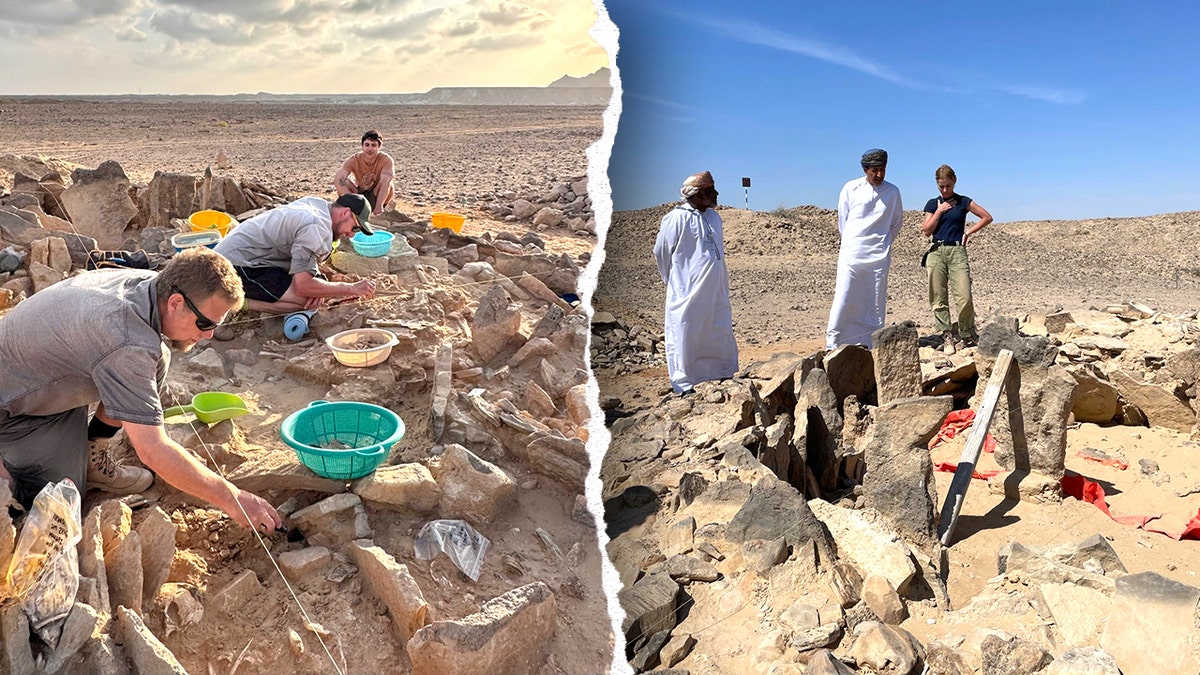
New research suggests Neolithic communities in southern Arabia may have relied on shark meat as a major food source. (ARUP)
Anthropologist Jiří Šneberger said the team used stable isotope analysis to reconstruct the ancient people's diets — which suggested a likelihood of shark meat, the release noted.
TEST YOURSELF WITH OUR LATEST LIFESTYLE QUIZ
"Based on preliminary results from stable isotope analysis used to reconstruct the diet, we are considering that the population we studied may have relied on shark meat as one of its main sources of food and nutrition," he said.
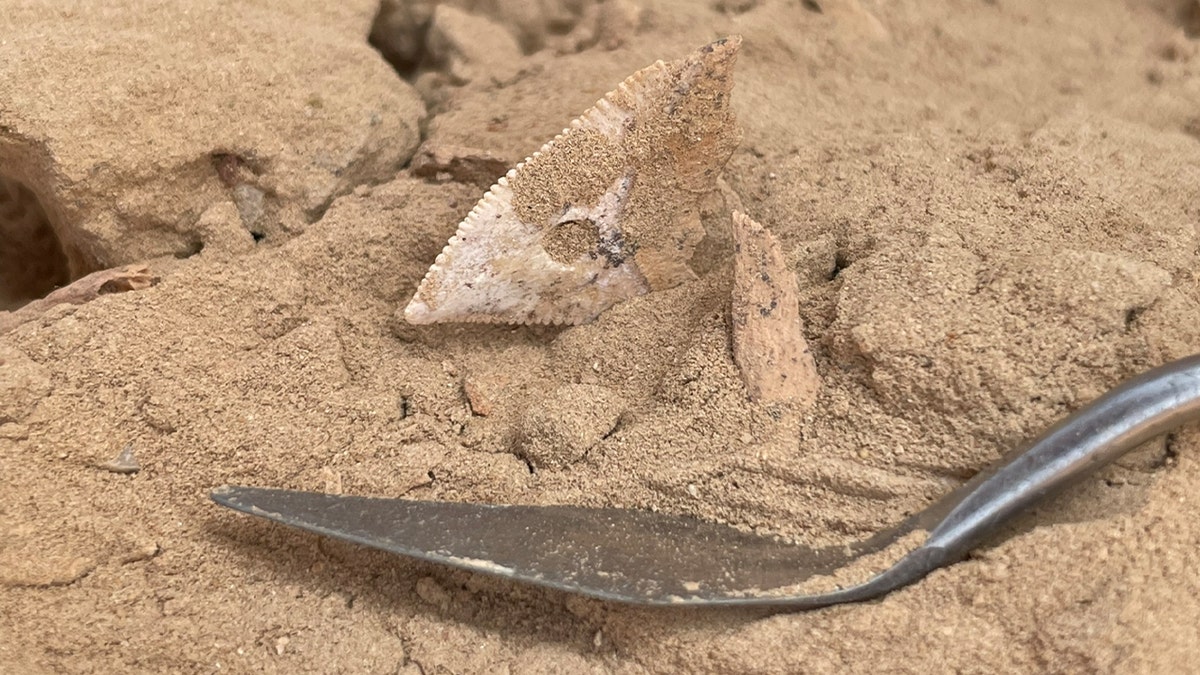
Researchers analyzed tooth samples from a Neolithic burial site to reconstruct ancient diets using stable isotope analysis. (ARUP)
The study is the first of its kind, said Alžběta Danielisová, an archaeologist at ARUP and leader of the expedition.
"For the very first time, we were able to document specialized hunting of marine predators using natural-science data, directly through analysis of the local buried community," Danielisová said.
CLICK HERE TO SIGN UP FOR OUR LIFESTYLE NEWSLETTER
"The connection of this burial community with sharks is extremely interesting, and represents a new finding — not only for prehistoric Arabia, but for all Neolithic cultures in arid regions."
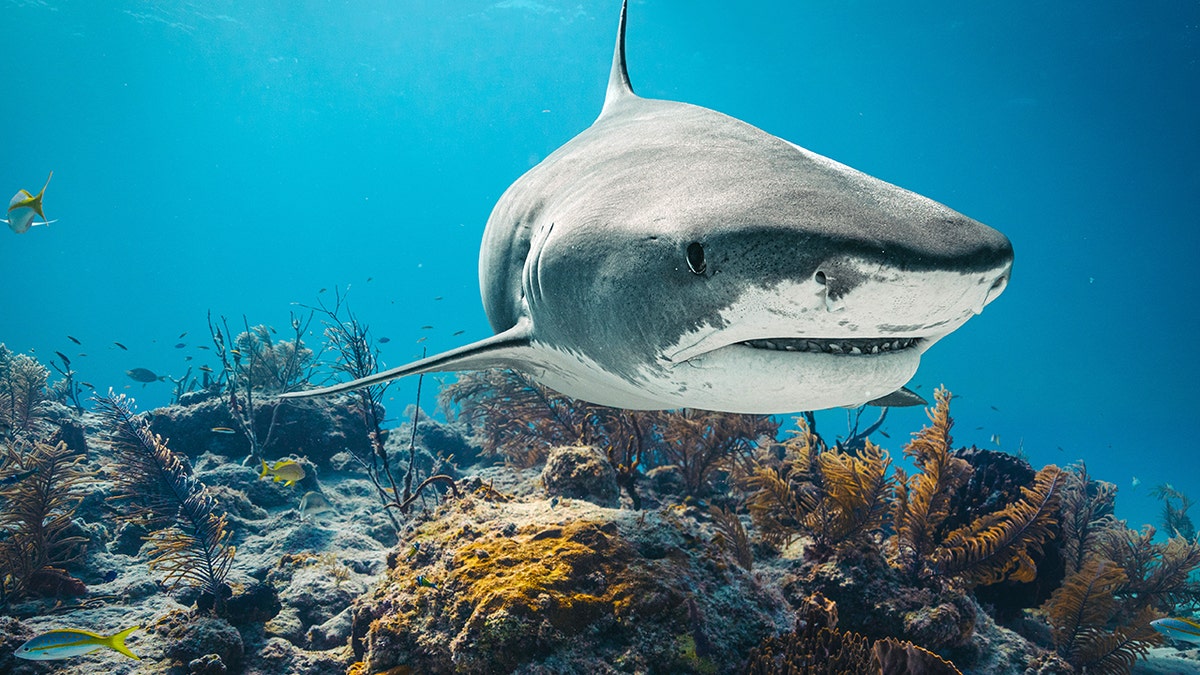
The findings suggest shark meat played a significant role in nutrition for ancient populations in southern Arabia. (iStock)
She added, "We know these were not just ordinary proteins, but proteins from the very top of the food chain."
Fox News Digital reached out to Danielisová for comment but did not immediately hear back.
CLICK HERE FOR MORE LIFESTYLE STORIES
Officials believe the study will have international implications, and research into the site — and the teeth found there — is ongoing.
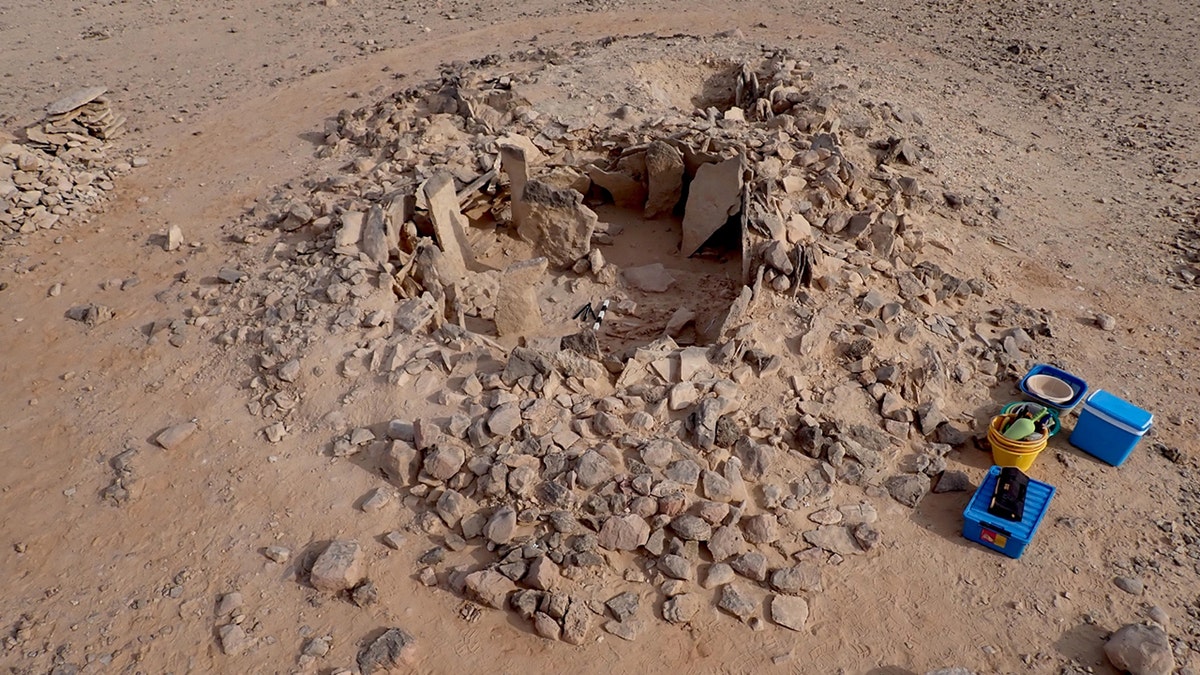
"On a global scale, the findings demonstrate how humans adapted to a wide range of environmental and climatic conditions," the release said. (ARUP)
The results so far, researchers say, are proof of a "highly flexible and adaptive subsistence strategy — combining hunting, gathering, herding and systematic exploitation of marine resources."
The release added that "on a global scale, the findings demonstrate how humans adapted to a wide range of environmental and climatic conditions."
CLICK HERE TO GET THE FOX NEWS APP
"They also confirm that Wadi Nafūn functioned for more than three centuries as a central ritual site that unified different groups across the region."