NEWYou can now listen to Fox News articles!
One thing that is often overlooked, or simply not understood, is how hard a fate it was to be born into a segregated America and then come of age just as the country began to reckon with its racial horrors in the 1960s. For centuries, blacks had been slaves and then segregated, always divorced from the full rights promised by American principles. They built a world within America, a parallel civilization of churches, schools, businesses, and communities forged out of necessity and extraordinary will. And then in the 1960s, one civil rights victory after another came. How does an oppressed people come into freedom, one of the hardest yet most rewarding conditions to live in? In that shock of freedom, which path is the right one forward?
That was the fate of Bob Woodson, who passed away on May 19, 2026, at 89 years old. He was born Robert Leon Woodson on April 8, 1937, in Philadelphia, Pennsylvania, the son of a working-class family that knew both poverty and promise. His father died when he was still a boy, and Bob and his four siblings were raised by their mother in the housing projects of South and then West Philadelphia. He saw up close the damage that broken families, failing institutions, and street violence could do to a young life. At seventeen, he dropped out of high school and joined the Air Force, and began the long journey that would take him to college, graduate school, and the front lines of the civil rights struggle.
Bob marched, organized, and directed community development programs for the NAACP and other organizations. But the harder part may have come after the civil rights victories. It is often said that a victory gets you through the door where the real and hard work begins. Bob knew that better than most. He searched for the right path forward, working with the National Urban League, serving as a resident fellow at the American Enterprise Institute, trying one organization after another. He found them all, in one way or another, inadequate. It wasn't until 1981, armed with little more than a $25,000 grant and two decades of hard-won experience, that he founded what would become his life's work: the National Center for Neighborhood Enterprise. It later was renamed the Woodson Center.
15-YEAR-OLD BLACK TEEN'S MURDER REVEALS THE UGLY TRUTH ABOUT WHITE GUILT IN AMERICA
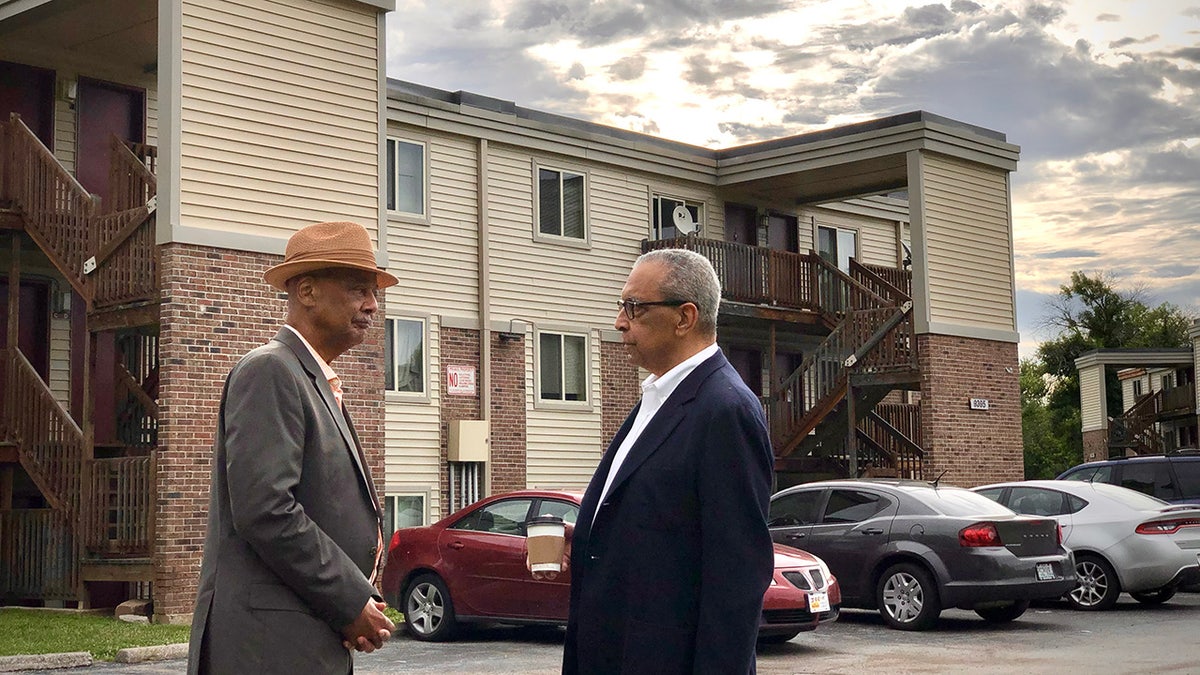
Eli Steele and Bob Woodson stand together while talking (Man of Steele Productions)
What gave Bob his fire, his light, was his unwavering desire to connect every single one of his people to the American Dream. He used that phrase, "his people," freely and proudly, because he saw clearly what was being done to them. He believed they were being fed the bad ideas of dependency by whites who wanted racial redemption for themselves more than they wanted black development. The liberal welfare politics that followed the Civil Rights movement had, in Bob's view, trapped millions of low-income blacks in a state of dependency, while enriching the elite class of professionals and politicians who managed their poverty. As he wrote in a 1995 essay in The New York Times, he had "spoken out against a liberal agenda that has trapped millions of low-income blacks in a state of dependency and used the conditions of poor blacks to establish race-based policies that benefit middle- and upper-income blacks."
At the same time, Bob sought to build bridges with whites, but on the right terms. Not through guilt. Not through dependency. He sought to create that bridge through the American principles that he believed belonged to everyone equally. I attended several events with him over the years, and he had a ritual. He would look out at a room that often contained a smattering of whites and then say with that mischievous wink: "I absolve every one of you. Not one of you is guilty. I absolve all of you of the racial sins of the past." People would laugh. But underneath that joke was a profound and deliberate act. Bob knew, as my father Shelby Steele has always argued, that the post-1960s Left had sought power by kept whites on the hook for the sins of the past, not to achieve justice, but to maintain political leverage. In doing so, they had engineered a permanent gap between blacks and whites. By offering the joke of an absolution, Bob was, on one hand, mocking the Left's efforts to guilt whites, and on the other hand, inviting whites to come down off the hook and join him as equal human beings, fallible, capable, and responsible together for building something better.
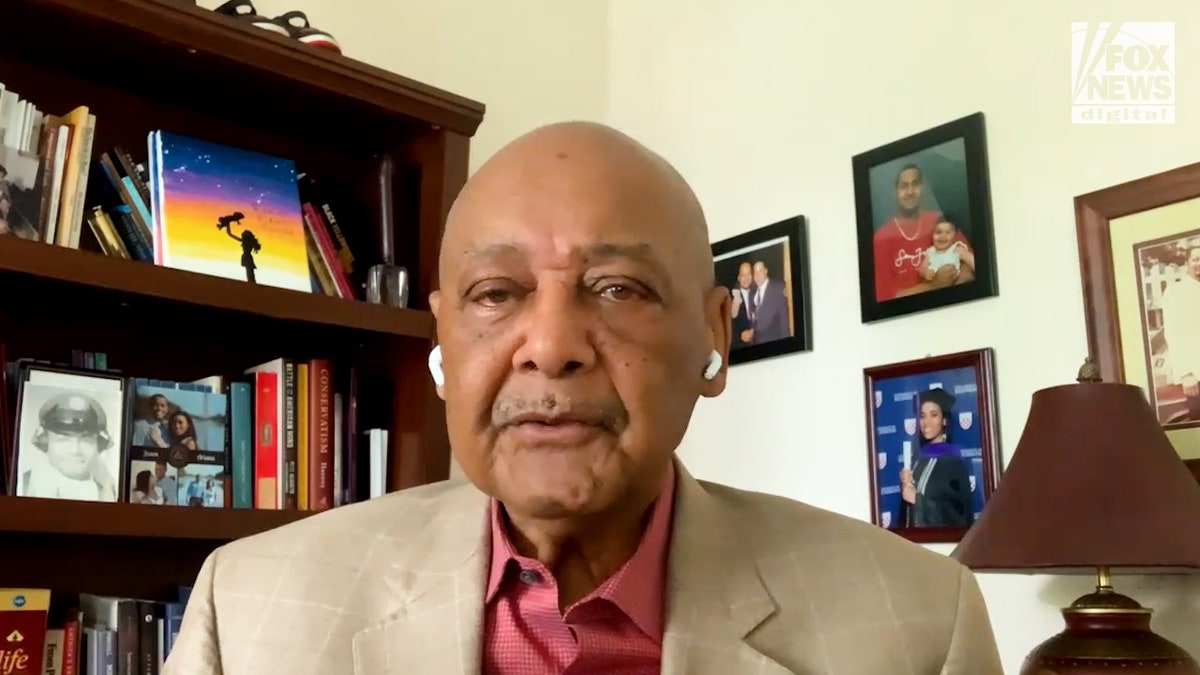
Robert Woodson interview with Fox News (Fox News Digital)
Bob Woodson was a unifier in the most practical sense. He refused to allow himself to be corrupted by the racial politics that consumed so much of the post-Civil Rights era. What he wanted above all were solutions — on the ground, in communities, run by the people who lived there. The Woodson Center brought training and support to more than 2,600 leaders of faith-based and community organizations in 39 states, helping them secure more than ten times the funding the Center itself spent. These were not theoretical programs dreamt up by bureaucrats in Washington. They were answers forged by the people closest to the problems. And that was Bob’s secret sauce: help the right people closest to the problem for they know the answer.
My father and Bob go way back to the 1980s. They were on television together several times. It even became a small joke in our house that if one couldn't make an appearance, the other would fill in. I met Bob for the first time around 2016 through our mutual friend Beth Feeley. One of the first things he told me was that he wanted to do a book or media series on the historical heroes of black America. He wanted to exalt men and women like Frederick Douglass, Booker T. Washington, Ida B. Wells, Madam C. J. Walker, and Robert Smalls, who had built, thrived, and overcome against impossible odds.
He was sickened by what he saw as a narrative of victimhood that had taken hold of so many young black minds. On one of our early calls he said something I will never forget: "How can you do that to children? It's abuse." He was right. A people cut off from their true heritage, a heritage of surviving, overcoming, and thriving, is a people without a compass. The victimhood narrative was false, and it was poison. It benefited only the black elites and white liberals who trafficked in it.
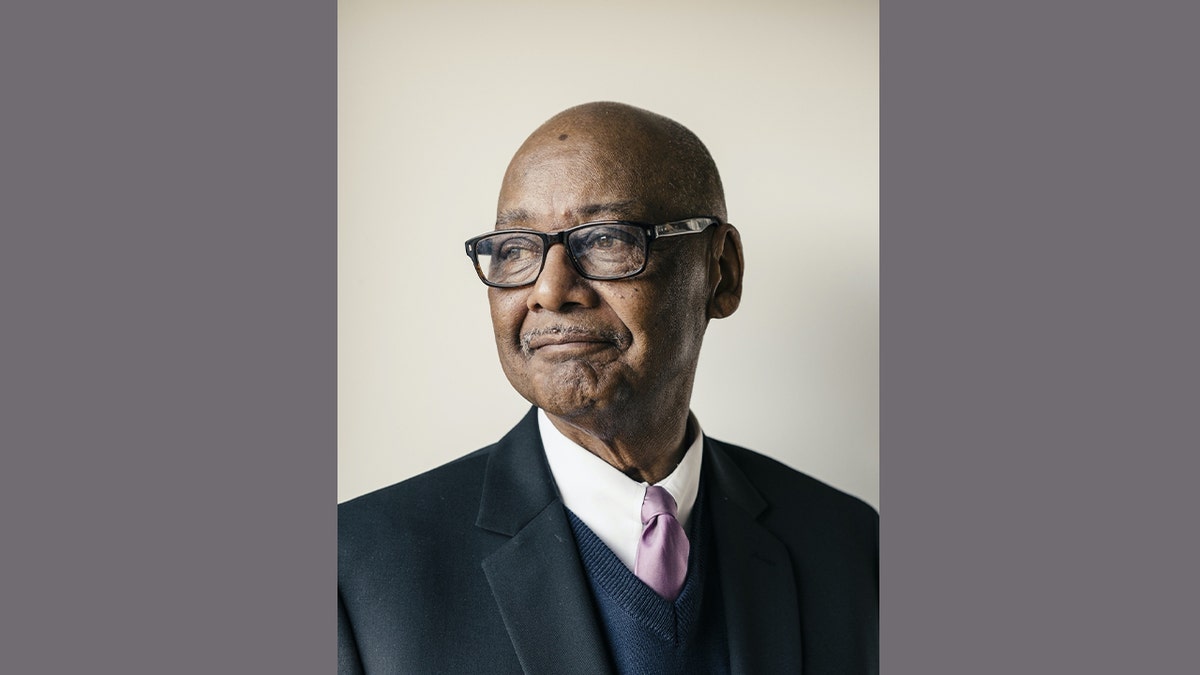
Robert L. Woodson Sr. (Woodson Center)
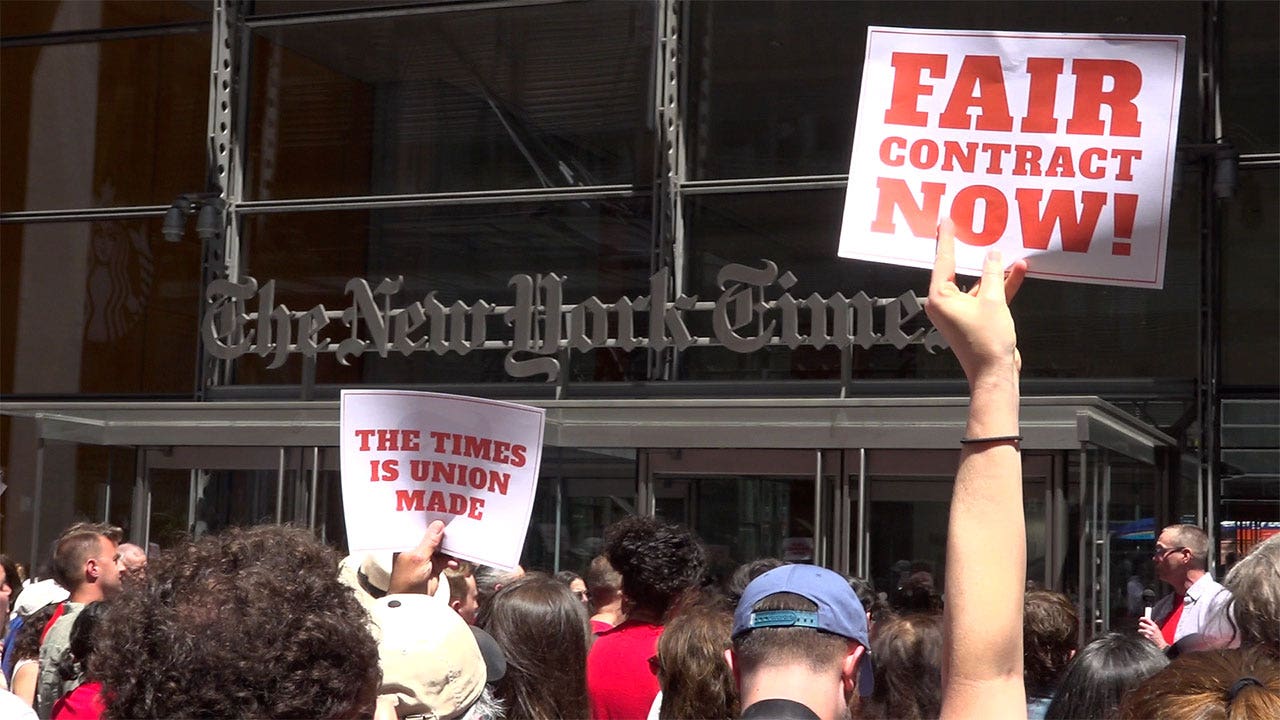
He soon launched that project that became 1776 Unites, and it was launched as a direct counter to The New York Times' 1619 Project. Where the 1619 Project sought to place slavery at the center of the American story and continue the legacy of racist America, the 1776 Unites project sought to correct the record of America’s founding and it also told the stories of blacks who became millionaires despite oppression, who built institutions, who refused to be defined by the oppression that had been done to them. Bob wanted to plant seeds of possibility in young minds and drive out the curse of fatalism.
My favorite memory of Bob is from Ferguson, Missouri, where we flew him out to be interviewed for "What Killed Michael Brown?" the documentary I made with my father. He met us in the hotel lobby wearing his brown suit and a fedora. His style was old school black. He reminded me of the blacks I saw growing up in San Francisco and Oakland during the 1980s. We took him to Canfield Drive, to the spot where Michael Brown had been shot. Bob paused, removed his fedora, and said a prayer. Then we sat down for the interview. He had no filter. The gems came one after another and I remember thinking, how will I ever edit all of this?
The moment that has stayed with me was when he paused and said that if Michael Brown had valued his life, he would not have risked it, he would not have charged Officer Darren Wilson in a way that put his life in mortal danger. Bob said it with that slight, sad smile of his, a smile that held both the tragedy and the promise. The tragedy that a young man had made choices that put his life at terrible risk. The promise that by naming the truth plainly, Bob was pointing toward something better. He believed the power of truth would force change, that only by seeing the full horror of what had transpired could we begin a turn toward betterment. How do we bring value back to life? That was his question. It was always his question.
CLICK HERE TO DOWNLOAD THE FOX NEWS APP
Bob Woodson is gone now. He was 89 years old, and he gave every one of those years to the fight. We will never see him and his fedora again. But his work remains unfinished, and it falls to us to carry it on. We must tell the true stories of America, warts and triumphs. We must never turn away from truth, no matter how horrifying. We must strive to show understanding and always reject the politics of dependency and victimhood. We must build on the ground, with the people who live there, and invite everyone, black and white, to work together as equal human beings.
That was Bob's singular talent, and it is now his challenge to us. May God bless Robert L. Woodson Sr. May we have the strength to carry on his work.