NEWYou can now listen to Fox News articles!
Passage of the SAVE America Act is of paramount importance to President Donald Trump and many congressional Republicans.
In his State of the Union speech, the president implored lawmakers "to approve the SAVE America Act to stop illegal aliens and other unpermitted persons from voting in our sacred American elections."
The House approved the plan to require proof of citizenship to vote last month, 218-213. There’s now a different version of the legislation that’s in play. And, as is often the case, the hurdle is the Senate. Specifically, the Senate filibuster.

Attendees listen as Rep. Chip Roy, R-Texas, speaks at an "Only Citizens Vote" bus tour rally advocating passage of the SAVE Act at Upper Senate Park outside the U.S. Capitol in Washington, D.C., on Sept. 10, 2025. (Kent Nishimura/Getty Images)
So some Republicans are trying to save the SAVE America Act.
It’s important to note that Trump never called for the Senate to alter the filibuster in his State of the Union address. But in a post last week on Truth Social, Trump declared, "The Republicans MUST DO, with PASSION, and at the expense of everything else, THE SAVE AMERICA ACT."
Again, the president didn’t wade into questions about overcoming a filibuster. But "MUST DO" and "at the expense of everything else" is a clear directive from the commander in chief.
That’s why there’s a big push by House Republicans and some GOP senators to alter the filibuster — or handle the Senate filibuster differently.
It’s rare for members of one body of Congress to tell the other how to execute their rules and procedures. But the strongest conservative advocates of the SAVE America Act are now condemning Senate Republicans if they don’t do something drastic to change the filibuster to pass the measure.
Some Senate Republicans are pushing for changes, or at the very least, advocating that Senate Republicans insist that Democrats conduct what they refer to as a "talking filibuster" and not hold up the legislation from the sidelines. It takes 60 votes to terminate a filibuster. The Senate does that by "invoking cloture." The Senate first used the cloture provision to halt a filibuster on March 8, 1917. Prior to that vote, the only method to end a filibuster was exhaustion — meaning that senators finally just run out of gas, quit debating and finally voted.
So let’s explore what a filibuster is and isn’t and dive into what Republicans are talking about when they’re talking about a talking filibuster.
The Senate’s leading feature is unlimited debate. But, ironically, the "debate" which holds up most bills is not debate. It’s simply a group of 60 lawmakers signaling offstage to their leaders that they’ll stymie things. No one has to go to the floor to do anything. Opponents of a bill will require the majority tee up a cloture vote — even if legislation has 60 yeas. Each cloture vote takes three to four days to process. So that inherently slows down the process — and is a de facto filibuster.
But what about talking filibusters? Yes, senators sometimes take the floor and talk for a really long time, hence, the "unlimited debate" provision in the Senate. Senators can generally speak as long as they want, unless there’s a time agreement green-lighted by all 100 members.
That’s why a "filibuster" is hard to define. You won’t find the word "filibuster" in the Senate’s rules. And since senators can just talk as long as they want, they might argue that suggesting they are "filibustering" is pejorative. They’re just exercising their Senate rights to speak on the floor.
A true filibuster is a delay. For instance, the record-breaking 25-hour and 8-minute speech last year by Sen. Cory Booker, D-N.J., against the Trump administration was technically not a filibuster. Booker began his oratory on the evening of March 31, ending on the night of April 1. Once Booker concluded, the Senate voted to confirm Matt Whittaker as NATO ambassador. The Senate was supposed to vote on the Whitaker nomination on April 1 anyway. So all Booker’s speech did was delay that confirmation vote by a few hours. But not much.
In October 2013, Sen. Ted Cruz, R-Texas, held the floor for more than 21 hours. It was part of Cruz’s quest to defund Obamacare. But despite Cruz’s verbosity (and a recitation of Green Eggs and Ham by Dr. Suess), the Senate was already locked in to take a procedural vote around 1 p.m. the next day. Preparations for that vote automatically ended Cruz’s speech. Thus, it truly wasn’t a filibuster either.
COLLINS BOOSTS REPUBLICAN VOTER ID EFFORT, BUT WON’T SCRAP FILIBUSTER

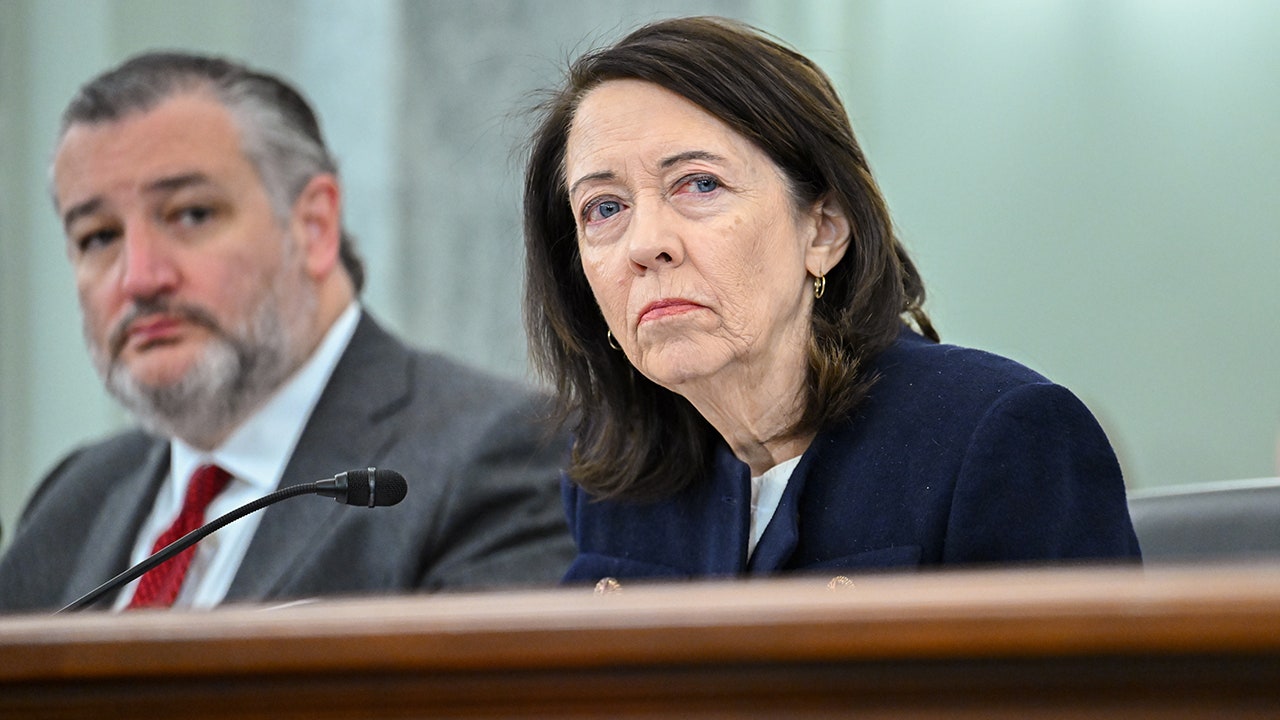
Sen. Ted Cruz, R-Texas, during an oversight hearing in Washington, D.C., on Dec. 17, 2025. (Kent Nishimura/Bloomberg via Getty Images)
So, this brings us to the talking filibuster which actually gums up the Senate gearboxes. A talking filibuster is what most Americans think of when they hear the term "filibuster." That’s thanks to the iconic scenes with Jimmy Stewart in the Frank Capra classic, "Mr. Smith Goes to Washington."
Most senators filibuster by forcing the Senate to take two cloture votes — spread out over days — to handle even the simplest of matters. That elongates the process by close to a week. But if advocates of a given bill have the votes to break the filibuster via cloture, the gig is up.
However, what happens if a senator — or a group of senators delay things with long speeches? That can only last for so long. And it could potentially truncate the Senate’s need to take any cloture vote, needing 60 yeas.
Republicans who advocate passage of the SAVE America Act believe they can get around cloture — and thus the need for 60 votes — by making opponents of the legislation talk. And talk. And talk.
And once they’re done talking, the Senate can vote — up or down — on the SAVE Act. Passage requires a simple majority. The Senate never even needs to tangle with 60.
Senate Rule XIX (19) states that "no senator shall speak more than twice upon any one question in debate on the same legislative day."
Easy enough, right? Two speeches per day. You speak twice on Monday, then you have to wait until Tuesday? Democrats would eventually run out of juice after all 47 senators who caucus with Democrats have their say — twice.
But it’s not that simple. Note the part about two speeches per "question."
Well, here’s a question. What constitutes a "question" in Senate parlance? A "question" could be the bill itself. It could be an amendment. It could be a motion. And just for the record, the Senate usually cycles through a "first-degree" amendment and then a "second-degree" amendment — to say nothing of the bill itself. So, if you’re scoring at home, that could be six (!) speeches per senator, per day, on any given "question."
Questions?
But wait. There’s more.
Note that Rule XIX refers to a "legislative day." A legislative day is not the same as a calendar day. One basic difference is if the Senate "adjourns" each night versus "recessing." If the Senate "adjourns" its Monday session on calendar day Monday, then a new legislative day begins on Tuesday. However, the legislative day of "Monday" carries over to Tuesday if the Senate "recesses."
It may be up to Senate Majority Leader John Thune, R-S.D., whether the Senate "adjourns" or "recesses." The creation of a new legislative day inhibits the GOP talking filibuster effort.
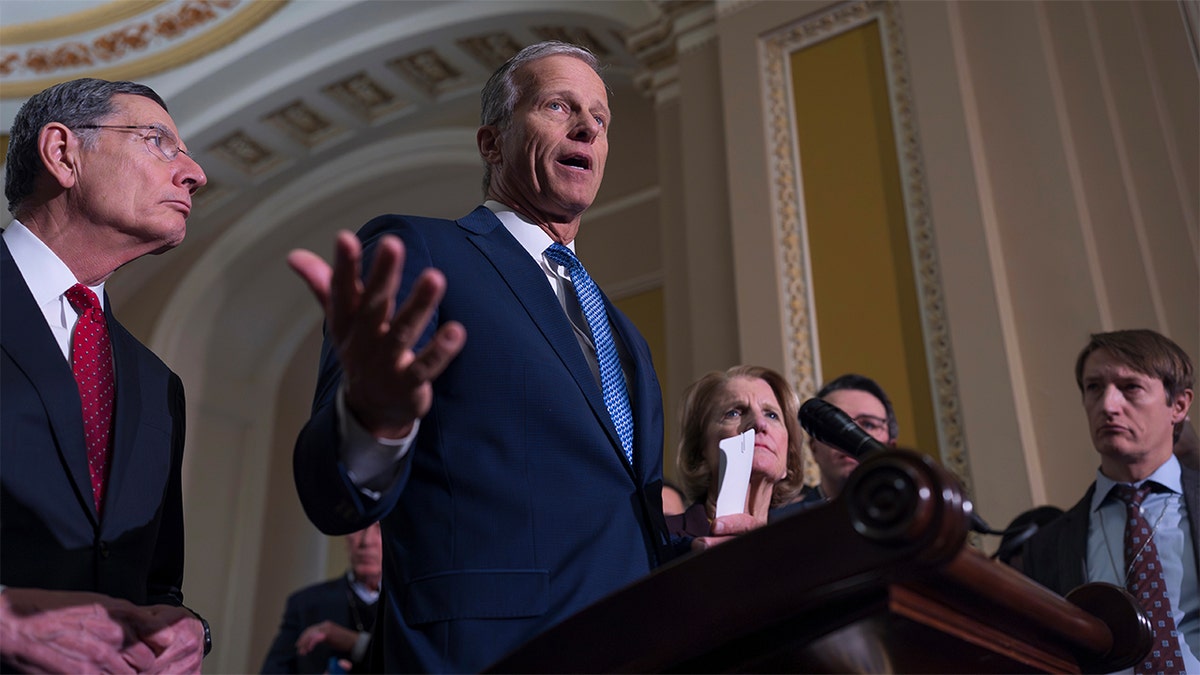
Senate Majority Leader John Thune, R-S.D., center, arrives for a news conference after a policy luncheon on Capitol Hill, Tuesday, Feb. 3, 2026, in Washington. (Mariam Zuhaib/AP Photo)
Democrats would obviously push for the Senate to adjourn each day. But watch to see if talking filibuster proponents object to Thune’s daily adjournment requests. If the Senate votes to stay in session, that forces the legislative day of Monday to bleed over to Tuesday.
Pro tip: Keep an eye on the adjournment vs. recess scenario. If a talking filibuster supporter tries to prevent the Senate from adjourning, that may signal whether the GOP has a shot at eventually passing the SAVE Act. If that test vote fails and the Senate adjourns for the day, the SAVE Act is likely dead in the water.
We haven’t even talked about a custom practiced by most Senate majority leaders to lock down the contours of a bill when they file cloture to end debate.
It’s typical for the presiding officer to recognize the Senate majority leader first on the floor for debate. So Thune and his predecessors often "fill" what’s called the "amendment tree." The amendment tree dictates how many amendments are in play at any one time. Think of the underlying bill as a "trunk." A "branch" is for the first amendment. A "sprig" from that branch is the second amendment. Majority leaders often load up the amendment tree with "fillers" that don’t change the subject of the bill. He then files cloture to break the filibuster.
That tactic curbs the universe of amendments. It blocks the other side from engineering controversial amendments to alter the bill. But if Thune doesn’t file cloture to end debate, then the Senate must consider amendment after amendment, repeatedly filling the tree and voting on those amendments. This would unfold during a talking filibuster, not when Thune is controlling the process by filing cloture and "filling the tree."
This is why Thune is skeptical of a talking filibuster to pass the SAVE Act.
"This process is more complicated and risky than people are assuming at the moment," said Thune.
In fact, the biggest "benefit" to filing cloture may not even be overcoming a filibuster, but blocking amendments via management of the tree. Republicans are bracing for amendments Democrats may offer.
"If you don't think Democrats have a laundry list of amendments, talking about who won the 2020 election, talking about the Epstein files — if you don't think they have a quiver full of these amendments that they're ready to get Republican votes on the record, then I’ve got a bridge to sell you," said George Washington University political science professor Casey Burgat.
Plus, forcing a talking filibuster for days precludes the Senate from passing a DHS funding bill. That’s to say nothing of confirming Sen. Markwayne Mullin, R-Okla., as Homeland Security secretary. His confirmation hearing likely comes next Wednesday, but a protracted Senate debate would block a confirmation vote from the floor.
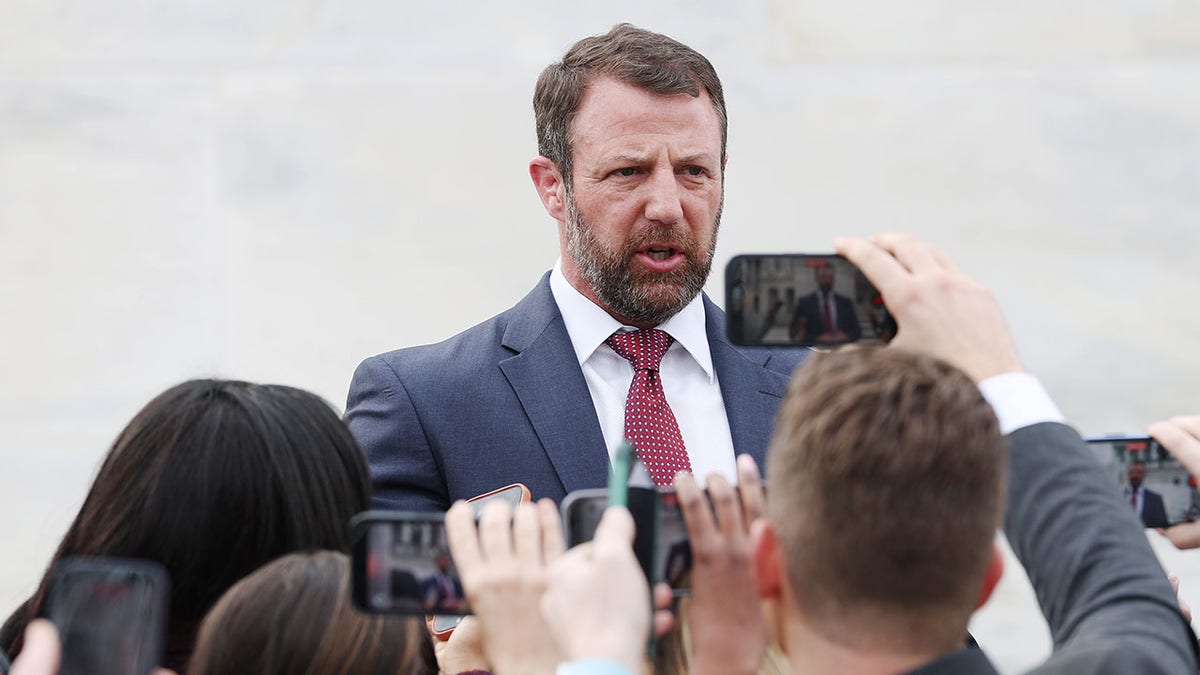
Sen. Markwayne Mullin, Republican from Oklahoma, addresses reporters at the U.S. Capitol after being tapped as President Donald Trump's new nominee to lead DHS, March 5, 2026. (Anna Moneymaker/Getty Images)
Thune all but killed the talking filibuster maneuver on Tuesday — despite the president’s ultimatum.
"Do you run a risk of being on the wrong side of President Trump and your resistance to do this talking filibuster, tying the Senate in knots for weeks?" asked yours truly.
"We don't have the votes either to proceed, get on a talking filibuster, nor to sustain one if we got on it," replied Thune. "I understand the president's got a passion to see this issue addressed."
I followed up.
"Does he understand that, though?"
"Well, we've conveyed that to him," answered Thune. "It’s about the math. And, for better or worse, I'm the one who has to be a clear-eyed realist about what we can achieve here."
And there just doesn’t appear to be any parliamentary way to get there with the talking filibuster.
CLICK HERE TO DOWNLOAD THE FOX NEWS APP
Like many things in Congress, it all boils down to one thing.
As Thune said, "it’s about the math."
Chad Pergram currently serves as Chief Congressional Correspondent for FOX News Channel (FNC). He joined the network in September 2007 and is based out of Washington, D.C.